The Visual Advantage: Enhancing Your Job Search with Strategic Design
The modern job search is a multifaceted process that extends far beyond submitting a resume. It is a strategic campaign requiring organization, clear communication, and a professional presentation across multiple platforms. For job seekers, hiring managers, recruiters, and career coaches, effectively managing and illustrating this process is key to success. This is where the thoughtful use of Job Search icons becomes a powerful, yet often overlooked, tool. These simple visual elements can transform complex information into intuitive, accessible content, aiding in navigation, comprehension, and overall user experience.
Common Challenges in the Modern Job Search Journey
Navigating a career transition presents several universal hurdles. Applicants often face information overload, managing countless job boards, company websites, and networking contacts. The process can feel disjointed, leading to a lack of organization and missed opportunities. Furthermore, creating materials—from personal websites to presentation slides—that clearly and professionally communicate one's skills and journey requires design resources that many individuals lack. For those building apps, templates, or career resources aimed at helping job seekers, the challenge is to create interfaces that are instantly understandable and guide users effortlessly toward their goals.
How Job Search Icons Address Core Needs
A dedicated set of Job Search icons serves as a visual shorthand, directly addressing these challenges. Icons for concepts like "Resume," "Interview," "Network," or "Application" instantly convey meaning, reducing cognitive load. In a mobile app designed for tracking applications, a simple "Checklist" icon can represent the progress stage more efficiently than text. On a career coach's website, an "Assessment" icon can quickly guide visitors to helpful tools. These icons act as visual anchors, creating a consistent and professional language that simplifies the entire ecosystem of job hunting.
Practical Applications and Tangible Outcomes
The utility of these icons spans across the digital environments where job search activities occur. Consider a website template for a personal portfolio. Integrating Job Search line icons for "Skills" or "Portfolio" within the navigation or section headers creates a clean, modern interface that directs visitors intuitively. In a presentation on interview techniques, using an "Interview" icon to break up slides and highlight key takeaways makes the content more engaging and memorable. For developers creating a job-search mobile app, these icons are essential for building a clear UI; a "Notification" icon for alerting users about new postings, or a "Map" icon for locating career fairs, enhances functionality with clarity.
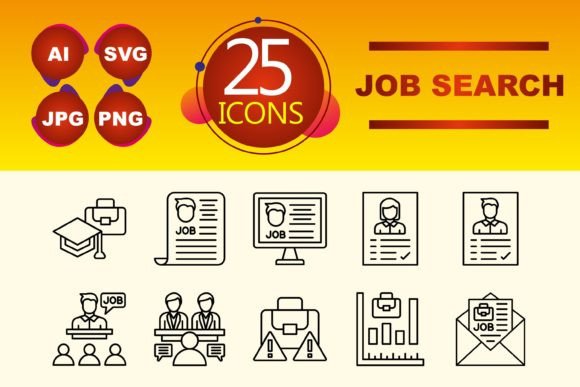
The available file formats—AI, JPG, PNG, and SVG—ensure broad implementation. SVG files allow for crisp, scalable icons on responsive websites, while PNG and JPG files are perfect for presentations and digital documents. The AI source files offer designers the flexibility to customize colors or styles to match any brand or personal aesthetic, ensuring the icons integrate seamlessly into existing projects.
Tailoring the Use for Different Audiences
The approach to using a Job Search icon set varies wonderfully depending on the user's role and objective.
- For the Individual Job Seeker: You might use these icons to elevate your personal materials. Adding a polished "Contact" icon to your resume's header or using "Network" icons in your LinkedIn profile's summary section can add a touch of professional design. They can also be used in personal tracking sheets or vision boards to visually categorize your goals.
- For Career Professionals & Coaches: These icons are invaluable for creating client resources. Developing infographics that explain the job search cycle with clear icons makes complex processes easy to digest. Website buttons adorned with "Resources" or "Coach" icons improve site navigation and credibility.
- For Developers and UI/UX Designers: This set provides a cohesive library to build user-friendly applications. The line icon style offers a modern, minimalist aesthetic suitable for clean app interfaces. Using consistent icons for actions like "Save Job," "Share," or "Filter" creates an intuitive experience that reduces user frustration and supports task completion.
- For Educators and Trainers: In workshops or online course materials, icons serve as visual cues that enhance learning. Slides segmented with icons for "Research," "Apply," and "Follow-up" help structure the curriculum and aid information retention for students.
Implementing Icons for Maximum Benefit
To integrate Job Search icons effectively, start by mapping out the key touchpoints in your specific project. Identify where users might encounter confusion or where information density is high. Replace lengthy textual labels with an appropriate icon, but always ensure there is a textual fallback or tooltip for absolute clarity, adhering to accessibility best practices. Maintain consistency; use the same icon for the same action or concept throughout your entire platform to build a reliable visual language. Finally, respect the style. The line icon format suggests clarity and efficiency, so pair them with clean layouts and ample white space to let their simplicity shine and support your content.
The outcome of this strategic visual enhancement is a more streamlined, professional, and user-centric experience. Whether you are an applicant organizing your journey, a coach guiding others, or a designer building a tool, these icons help translate the often chaotic process of finding a career into a visually structured, manageable, and ultimately more successful endeavor. By focusing on the user's need for clarity and ease, these simple graphics become not just decoration, but fundamental components of an effective job search strategy.