A Guide to Robotics for Design and Development
Robotics is an interdisciplinary field of engineering and computer science dedicated to the design, construction, operation, and application of robots. A robot is a programmable machine capable of carrying out a complex series of actions automatically, often with some degree of autonomy. Modern robotics integrates mechanical design, electronic control, sensor feedback, and sophisticated software to create systems that can perform tasks in physical environments, ranging from industrial assembly lines to exploratory surgery and autonomous vehicles.
Why Consider Robotics in Your Projects?
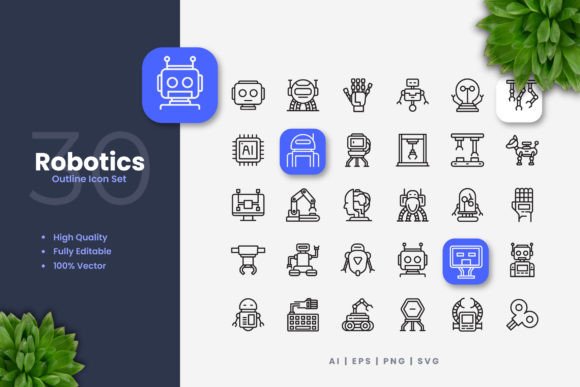
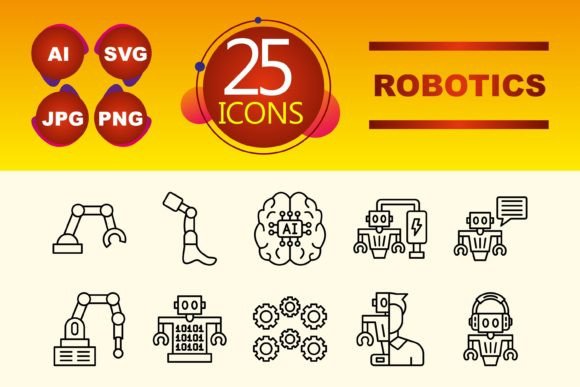
Interest in robotics can stem from various professional and creative needs. For designers and developers, incorporating robotics themes into visual materials signifies innovation, precision, and technological advancement. A set of robotics icons, such as a collection of 10 line-style icons available in AI, JPG, PNG, and SVG formats, provides a ready-made visual vocabulary. This is not merely about decoration; it's about effective communication. Using such assets can quickly establish a context of automation, engineering, or futuristic tech in user interfaces, app designs, website templates, presentations, or infographics.
Core Benefits and Practical Applications
The primary benefit of utilizing dedicated robotics visual assets like icon sets is consistency and clarity. A well-designed line icon set offers a clean, modern aesthetic that is easily scalable and recognizable across different media. The inclusion of multiple file types (AI for vector editing, JPG for universal compatibility, PNG for transparency, and SVG for web and scalable use) provides flexibility for diverse projects. For someone creating a tutorial on robotic programming, designing a dashboard for a manufacturing app, or preparing a presentation on automation trends, these icons can serve as immediate visual anchors, saving significant design time and reinforcing the subject matter.
Tradeoffs and Key Considerations
While a specialized icon set is helpful, it's important to evaluate its fit for your specific needs. A set focused solely on robotics, with 10 line icons, is intentionally narrow. Its strength is its thematic specificity, but this also presents a limitation. If your project requires a broader range of icons covering general technology or unrelated topics, this focused set would be insufficient on its own. You would likely need to supplement it with other assets.
Furthermore, the "line icon" style, characterized by outlined shapes, offers a particular look. It tends to be minimalist and works well in modern, clean interfaces. However, if your design language requires filled, solid, or more detailed illustrative icons, this style might not align visually. Assessing the existing visual design system of your project is crucial before integration.
When Robotics Assets Are a Strong Fit
A robotics icon set is a strong fit in several clear scenarios. First, for any project directly related to robotics education, product marketing, or technical documentation, these icons are highly relevant. Second, for UI/UX designers working on applications that control robots, simulate robotic processes, or display data from automated systems, using these icons enhances user understanding through familiar symbolism. Third, in presentation design for topics like Industry 4.0, AI integration, or future tech, such icons provide professional, thematic visuals that avoid generic clip art.
Evaluating Alternatives and Complementary Solutions
In situations where your project's scope is broader, alternatives are worth considering. General technology icon packs, which include icons for computing, networking, and devices alongside perhaps a few robot icons, might offer more versatility. For projects requiring a highly customized or branded look, commissioning original iconography tailored exactly to your platform might be the best path, though it involves greater cost and time.
Often, a mixed approach is practical. A core robotics set can be used for specific, themed sections of a project, while a more general icon library supports other parts. The key is to map your icon requirements to the content structure of your website, app, or presentation.
Practical Decision-Making Insights
To determine if a focused robotics icon set aligns with your goals, ask these practical questions:
- What is the primary subject matter of my project? If robotics or automation is a central theme, specialized icons are beneficial.
- How many distinct icon concepts do I need? If you need to represent multiple specific robotic components (arms, sensors, controllers), a themed set may cover them. If you only need one generic "robot" symbol, a broader set might suffice.
- What are my technical requirements? Check that the provided file formats (especially SVG for web development and AI for custom editing) match your workflow.
- Does the line icon style conform to my existing brand or design guidelines? Consistency in visual style is critical for professional outcomes.
Ultimately, the decision hinges on specificity versus versatility. A dedicated robotics asset provides authoritative, topic-specific visuals that communicate expertise and focus immediately. For audiences researching or learning about robotics, clear and appropriate iconography can enhance comprehension and engagement. For those evaluating or comparing robotic software or platforms, a UI that uses precise icons can improve usability and trust.
Aligning with Your Needs and Goals
Robotics, as a field, represents the tangible intersection of software intelligence and mechanical action. Using design assets centered on robotics is about visually embracing that concept. Whether you are selecting icons for a mobile app monitoring automated warehouse systems, comparing templates for a tech presentation, or learning how to represent complex processes in an infographic, the right visual tools matter. A concise, well-crafted robotics icon set serves a clear purpose: it eliminates ambiguity and provides a streamlined visual language for a sophisticated domain. By carefully considering the scope, style, and format of such assets against your project's concrete requirements, you can make an informed choice that supports both effective communication and efficient design execution.