Evaluating the Industry Icon Pack for Professional Design Projects
In the crowded landscape of digital assets, selecting the right visual toolkit is a critical, yet often overlooked, step in streamlining design workflows. For professionals working on websites, applications, or presentations, icons serve as fundamental visual shorthand. The Industry Icon Pack presents itself as a comprehensive set aimed at covering popular services and concepts. This article examines its characteristics, practical applications, and where it might fit within a designer's arsenal compared to other available approaches.
Core Characteristics and Distinct Design Approach
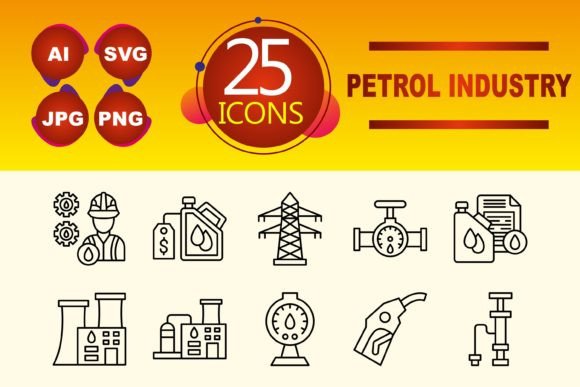
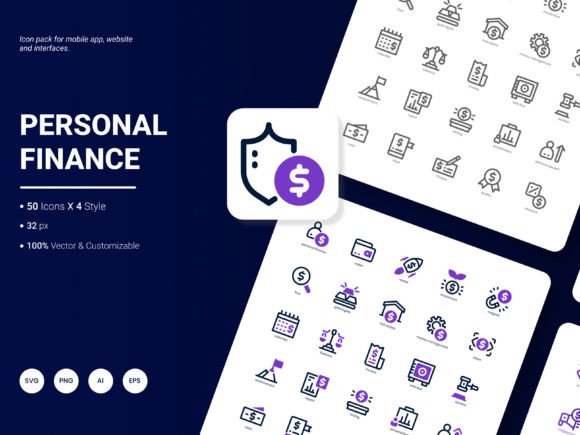
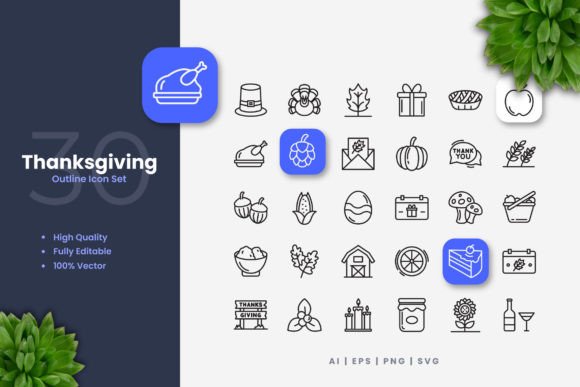
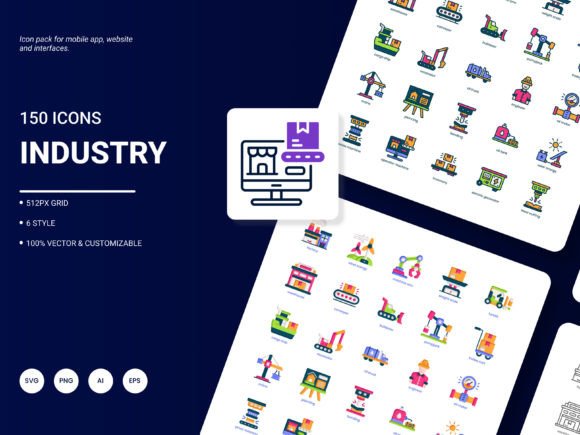
The Industry Icon Pack is defined by its scope and format flexibility. The set comprises 150 icons, which is a substantial number for a niche-focused collection. Its stated aim is to showcase "the most popular services and ideas," implying a curated selection rather than an exhaustive library of every possible industry symbol. This curated approach is its primary distinction. Designers often face a tradeoff between vast, generic icon libraries and smaller, more stylistically coherent packs. This pack attempts to occupy a middle ground—offering breadth within a specific thematic context.
The pack is promoted as being designed in a "fresh and trendy" style. In practice, this likely means avoiding overly skeuomorphic or brutally minimalist aesthetics, aiming instead for a contemporary look that balances detail with clarity. This stylistic positioning makes it relevant for projects requiring a modern, approachable visual language, from tech startup websites to contemporary business reports.
Format Flexibility and Integration Considerations
A significant technical advantage of the Industry Icon Pack is its availability in six file formats: AI, EPS, SVG, PNG, PDF, and JPG. This multi-format offering addresses different stages of the design process and integration needs.
- Vector formats (AI, EPS, SVG) are crucial for scalability and editing. These allow designers to modify colors, adjust strokes, or integrate icons directly into vector-based layouts without quality loss, which is essential for branding work or responsive web design where icons must adapt to various screen sizes.
- Raster formats (PNG, JPG) provide ready-to-use assets for contexts where quick placement is needed, such in some presentation software or fixed-size mockups.
- The inclusion of PDF can be useful for standardized document-based reports or client previews.
This format variety compares favorably to many icon sets that offer only PNG and perhaps a single vector format. It reduces a common friction point: finding an icon in the right style but needing to convert it for your specific tool, which can be time-consuming. The pack's claim of icons being "easily edited and flexibly integrated" hinges on this multi-format support.
Style Variations and Content Coverage
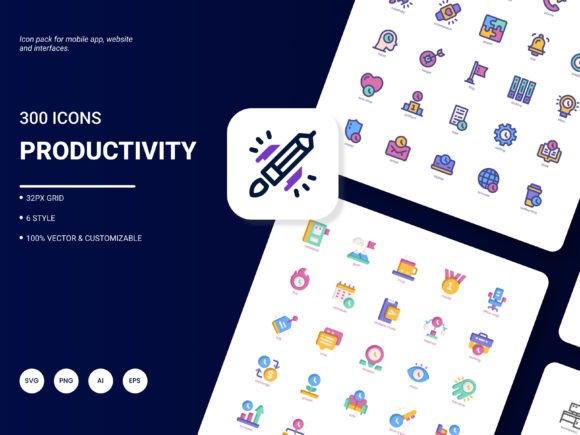
The mention of "6 style" within the features is noteworthy. While not explicitly detailed, this typically suggests variations like outline, filled, colored, or monochrome versions of the same icon concept. This offers practical value. A designer can maintain stylistic consistency across a document while using different icon styles to create visual hierarchy—for example, using filled icons for primary navigation elements and outline icons for secondary features. When comparing options, packs with multiple style variants provide more in-project utility than single-style sets, though they may command a higher price.
The content coverage of "popular services and ideas" is the pack's defining parameter. It will likely include icons for concepts like finance, technology, healthcare, commerce, and communication. This makes it a strong candidate for projects in the business, SaaS, or agency domains. However, its suitability diminishes for projects requiring highly specialized or niche symbols, such as those for specific engineering disciplines, obscure scientific fields, or localized cultural concepts. In those cases, a more general, massive icon library or a custom-designed set might be necessary.
Practical Use Cases and Realistic Applications
Understanding where the Industry Icon Pack practically shines helps in evaluation. Its design suggests several optimal use cases.
For website and application design, the vector formats (SVG) are particularly valuable. SVG icons can be styled with CSS, allowing their color to be dynamically changed to match theme states or user interactions. A set with a cohesive style ensures that the iconography across an entire user interface feels unified.
In presentations and analytical reports, the PNG and PDF formats offer quick drag-and-drop functionality. The trendy, fresh design can help modernize corporate slide decks or investor materials, making data and concepts more visually engaging than standard clip-art or older icon sets.
For designers creating website templates or infographics, having a bundled, royalty-free icon set with multiple styles accelerates the template creation process. It ensures all visual assets are legally cleared for redistribution and maintain a consistent aesthetic, which is a key selling point for template buyers.
A potential limitation lies in the specificity of the 150 icons. If your project requires an icon for a concept not deemed "popular" by the pack's curators, you will need to supplement the pack with another resource. This is a common tradeoff when choosing curated packs over comprehensive, search-based icon platforms.
Balanced Comparison with Alternative Approaches
When evaluating the Industry Icon Pack, it's helpful to consider the broader ecosystem of icon resources. Designers typically choose between several paths.
- Massive Online Icon Libraries: These platforms offer thousands or millions of icons across every conceivable category. Their strength is sheer coverage and searchability. Their tradeoff is often stylistic inconsistency; icons from different artists may not cohesively match, requiring extra design work to harmonize them. They also frequently operate on subscription models.
- Highly Specialized Niche Packs: These are small sets focused on, for example, medical icons or agricultural symbols. They offer deep coverage within a narrow field. The Industry Icon Pack is broader than these, serving as a generalist set for commercial and service-oriented fields.
- Custom Icon Design: The ultimate in consistency and uniqueness, but with significant cost and time investment. The Industry Icon Pack is a pre-made solution that sacrifices uniqueness for immediacy and cost-effectiveness.
The Industry Icon Pack positions itself as a balanced solution: more stylistically cohesive and format-rich than plucking random icons from a massive library, and more broadly applicable than a hyper-niche pack. Its value is highest for projects that need a ready-made, consistent visual language for mainstream business and service concepts without the need for subscription fees or custom design.
Decision Factors for Potential Users
Choosing whether this pack is the right resource involves a few key considerations.
Project Scope and Theme: If your project revolves around common industry, technology, finance, or service themes, the pack's content will likely suffice. For avant-garde artistic projects or deeply technical documentation, it may fall short.
Format Requirements: If your workflow relies heavily on editable vector assets for scaling and branding control, the inclusion of AI, EPS, and SVG is a strong pro. Teams working mostly in static raster environments might find the PNGs sufficient but could overlook the pack's full value.
Style Need: The "fresh and trendy" style should align with your project's visual direction. If you require a strictly retro, hand-drawn, or ultra-minimalist aesthetic, another pack would be a better fit, even if it has fewer icons or formats.
Budget and Usage Model: Compared to ongoing subscriptions, a one-time purchase pack like this can be cost-effective for long-term use across multiple projects, provided the icons remain relevant. For needs requiring constant access to wildly diverse new icons, a subscription library might offer more economic flexibility.
When the Industry Icon Pack Is the Right Choice
This icon set is likely an optimal selection when several conditions align. You are designing a digital product, template, or set of documents for a commercial, tech, or service-oriented client. You need a cohesive, modern visual style across all materials. Your project does not require esoteric symbols outside common business parlance. You value having editable vector source files to adapt icons to specific color schemes or sizes. And you prefer a one-time asset purchase over a recurring subscription. In this scenario, the Industry Icon Pack offers a streamlined solution that reduces design time spent on sourcing and harmonizing icons.
When to Consider Another Option
There are clear situations where an alternative resource would be more appropriate. If your project requires icons for highly specialized fields like advanced biochemistry, antique restoration crafts, or specific regional cultural symbols, the pack's "popular" focus will be a limitation. If your brand's established aesthetic is drastically different from the pack's "trendy" style—for instance, gritty vintage or futuristic neon—forcing these icons into that system could undermine visual cohesion. Finally, if your workflow is based entirely on a proprietary platform that uses only a specific, unusual icon format not included in the pack's six formats, the technical flexibility offered becomes irrelevant.
The invitation to "write to us if you have any suggestions on what we should include in our next update" indicates the pack is evolving. This is a positive sign for users who find the current set useful but lacking a few key symbols; they can potentially influence its expansion to better suit their needs over time.
Ultimately, selecting an icon resource is about matching asset characteristics to project constraints and aesthetic goals. The Industry Icon Pack presents a specific blend of scope, style, and format utility. By carefully weighing its defined offerings against the specific demands of your current and anticipated projects, you can make an informed decision on whether it serves as a versatile staple in your design toolkit or if your needs point towards a different category of resource.