The Strategic Advantage of a Modern Presentation Framework
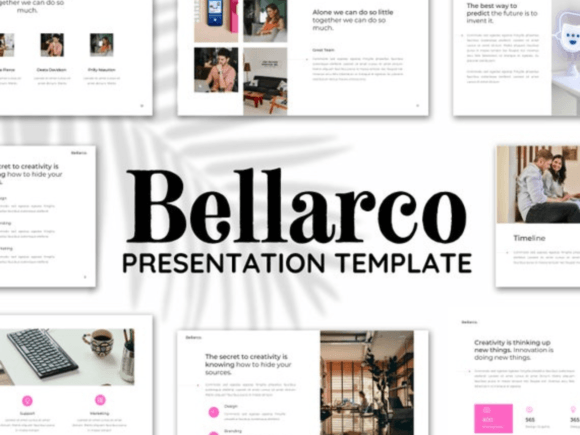
In today's communication landscape, the ability to present information clearly, persuasively, and professionally is a fundamental skill. Whether pitching to investors, reporting to stakeholders, or sharing research findings, the visual container for your ideas significantly influences their reception. A specialized toolset designed for this purpose, such as the Bellarco Business Presentation Template, transforms this often arduous task into a streamlined, creative process. It represents not just a collection of slides, but a coherent visual framework built for impact.
Core Principles of Effective Visual Communication
Before examining any specific toolkit, it's useful to understand what separates a compelling presentation from a forgettable one. Audiences, whether in a boardroom or a classroom, process information through two channels: the verbal content and the visual scaffold supporting it. A disconnect between these channels—where slides are cluttered, inconsistent, or visually dated—creates cognitive friction. The underlying goal of any professional template is to eliminate this friction by providing a pre-structured visual language. This language prioritizes clean layouts, intentional hierarchy, and space for content to breathe, allowing the presenter's message to become the focal point.
Structural Integrity and Creative Flexibility
A common misconception is that using a template constrains creativity. In practice, a well-constructed template like the Bellarco Business Presentation Template provides a robust foundation, freeing the user from the mechanical burdens of design alignment and consistency. Its structure offers a reliable grid and typographic system, while its creative photo layouts and editable infographics empower users to illustrate their unique narrative. This balance is critical: it ensures brand or project identity can shine without sacrificing professional polish. The inclusion of specific assets for processes, such as cycling flow diagrams, means complex information can be broken down intuitively.
A Toolkit for a Diverse Spectrum of Users
The utility of a versatile presentation framework extends far beyond the traditional corporate setting. Its value is derived from its adaptability to different contexts and content demands.
- Academic and Research Professionals: For Ph.D. dissertations or medical conference presentations, clarity and credibility are paramount. A clean, modern design helps frame complex data and methodologies without visual distraction, lending authority to the work.
- Entrepreneurs and Business Developers: Pitch decks and business reports rely on persuasive storytelling. A template with strong visual sequencing and easy-to-customize infographics allows founders to map their journey, market analysis, and financial projections in a way that resonates with investors.
- Educators and Trainers: In school presentations or professional training modules, engagement and comprehension are key. Creative layouts can break the monotony of text-heavy slides, aiding knowledge retention.
- Creative Professionals and Hobbyists: Even for personal projects like a real estate portfolio showcase or a baby shower photo presentation, a polished aesthetic elevates the experience. The ability to easily add personal photos within a professional layout bridges personal expression with refined design.
This broad applicability underscores a core principle: effective visual communication is a universal need, not a niche skill.
The Practicalities of Customization and Implementation
The promise of customization is often hindered by technical complexity. Here, the integration with a platform like Canva is a significant practical advantage. The drag-and-drop interface democratizes design editing. Users can, without specialized software or skills, execute essential modifications: changing text, shape, and background colors to match their branding palette, adding their own photographs and copy, and replacing fonts to suit their tone. This accessibility directly addresses two major barriers: time and cost. The requirement to hire a designer is removed, and the hours spent manually formatting slides from a blank canvas are reclaimed for content development and rehearsal.
Characteristics of a High-Quality Presentation Resource
Evaluating any presentation asset requires looking beyond its immediate features. Quality manifests in both the tangible outputs and the user experience.
- Resolution and Technical Specifications: A collection of 38 slides at 1920px x 1080px resolution ensures readiness for high-definition displays, a standard in modern conference rooms and virtual screen-sharing.
- Component Quality: The mention of high-quality elements refers to the crafted icons, graphics, and layout components that avoid a generic, clip-art appearance. These elements coalesce into a cohesive visual identity across the entire slide deck.
- Logical Content Groups: A template organized around key content groups—such as sections for introduction, data analysis, process explanation, and conclusion—provides a narrative roadmap. This helps users structure their story effectively, guiding audiences from problem to solution.
- Non-Restrictive Customization: True customizability means the framework does not lock users into rigid placements. As noted, changes to core visual properties like color and font are fully supported, allowing the Bellarco Business Presentation Template to serve as a true starting canvas, not a final, unalterable product.
Integrating a Template into Your Creative Workflow
Adopting a new tool requires a slight shift in process. The most effective approach begins with content outlining. Before even opening the design platform, define the narrative arc, key messages, and required data visualizations. Then, map this outline to the template's provided slide structures. Use the cycling process infographics for timelines or workflows. Employ the creative photo layouts for case studies or team introductions. This content-first methodology ensures the template serves your message, rather than your message being forced into the template. The editable nature of all components means you can adapt slides as needed, perhaps merging two concepts or expanding a single point across multiple visual variations.
Observations on Modern Presentation Trends and Needs
The evolution of presentation standards reflects a broader shift towards visual literacy. Audiences expect a degree of sophistication; bullet-point lists on a white background often fail to engage. Furthermore, the rise of remote collaboration and virtual pitches has increased the importance of visually compelling slides that can stand alone when shared digitally. A template that offers strong, standalone visuals addresses this hybrid presentation environment. Additionally, the need for speed is ever-present. Professionals across fields are required to produce polished materials under tight deadlines. A resource that mitigates the design burden while elevating output quality is not merely a convenience—it is a strategic asset for productivity and professional impression.
Ultimately, selecting a presentation framework is a decision about resource allocation. It involves investing time in content and narrative rather than in pixel alignment and font searching. The characteristics of such a template—its modern yet simple design, its creative layouts, its full customizability within an intuitive editor, and its breadth of ready-to-use slides—combine to create a powerful lever for communicators. It allows a business owner to craft a credible pitch deck, a researcher to present complex findings with clarity, or a hobbyist to celebrate a personal milestone with style, all within a consistent, professional visual environment that turns the act of presentation creation from a chore into a focused, creative endeavor.