Modern Communication Through Fashion Icons
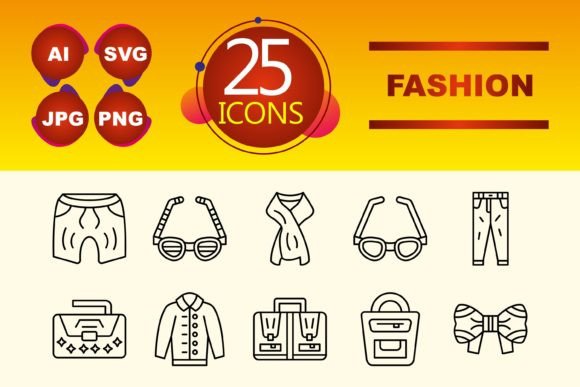
In the digital world, symbols often speak louder than words. Fashion icons are a specific set of visual shorthand designed to instantly communicate ideas related to style, apparel, accessories, and retail. Unlike a photograph or a detailed illustration, an icon reduces a complex concept to its simplest, most recognizable form. This set, for example, offers 10 distinct icons in a clean Line Icon style, perfect for conveying fashion-related themes quickly and elegantly.
Their main purpose is clarity and efficiency. In a crowded interface or a fast-paced presentation, a well-designed icon can guide a user, denote a category, or highlight a feature without requiring textual explanation. The value lies in their versatility and universal appeal. A simple icon of a dress, a shopping bag, or a pair of heels is understood across cultures and languages, making them powerful tools for global communication.
The Practical Appeal of Line Style Fashion Icons
The choice of a line style for these icons is particularly significant. Line icons use strokes to create forms without filled colors, resulting in a minimalist, modern, and lightweight aesthetic. This style integrates seamlessly into diverse designs without overwhelming the layout. It appeals to designers and creators who need visuals that are both functional and stylish, supporting a clean and professional look.
Whether you're a blogger highlighting a new clothing collection, a marketer creating a campaign for a boutique, or an entrepreneur building an e-commerce app, these icons can solve a common problem: the need for consistent, high-quality visuals without the time or budget for custom illustration. They support goals of enhancing user experience, speeding up design workflows, and maintaining a cohesive visual identity across different projects and platforms.
Where Fashion Icons Enhance Your Projects
The file formats included—AI, JPG, PNG, and SVG—directly speak to their wide range of applications. Each format serves a specific context, making the set genuinely adaptable.
- Mobile Apps & Websites: The SVG and PNG files are ideal here. Use them as intuitive navigation elements—an icon of a tag for a sale section, a hanger for a product catalog, or a heart for a favorites list. They help users navigate a fashion-focused interface intuitively.
- Presentations & Pitch Decks: For educators teaching design or entrepreneurs pitching a fashion startup, JPG or PNG icons can visually break up text-heavy slides. Use them to represent market segments, product categories, or brand values in a compelling way.
- Infographics & Reports: When visualizing data about retail trends, consumer preferences, or inventory, these line icons can serve as clear markers for different data points, making complex information more accessible and engaging.
- User Interface Design Templates: For freelancers or agencies creating UI kits for fashion clients, the AI (Adobe Illustrator) files are invaluable. They allow for complete customization—scaling, color changing, or stroke adjustment—to perfectly match a client's brand system.
Realistic Use Cases for Beginners and Professionals
Imagine you're a small business owner launching a website for your handmade jewelry. You might use the accessory icons from this set next to your product categories. A casual user creating a personal blog about sustainable fashion could embed these icons within posts to visually segment content. A professional developer building a fashion rental app would use the SVG icons as functional UI components, ensuring they scale perfectly on every screen size.
The key observation is that these icons act as a visual glue. They bridge the gap between a purely functional layout and a thematic, industry-specific design. They add a layer of relevant decoration that also serves a practical purpose, which is a hallmark of good digital design.
Important Considerations Before Using Fashion Icons
While a set like this offers immediate benefits, it's wise to consider a few points to ensure they integrate effectively into your work.
First, assess the visual consistency with your existing project. The line style is modern and thin; does it complement your current fonts, colors, and imagery? You might need to adjust the icon stroke weight or color using the provided AI or SVG files to achieve perfect harmony.
Second, think about contextual relevance. Do all 10 icons in the set correspond to concepts you actually need to communicate? It’s better to use a few highly relevant icons than to force the use of all ten. Their power is in their recognition, so choose the symbols that most directly align with your message.
Finally, consider the technical implementation. For web use, scalable SVG files are best for performance and flexibility. For print materials or simple digital graphics, high-resolution PNGs might be easier. Understanding the strengths of each file type will help you apply the icons correctly and get the best visual result.
Moving From Interest to Application
An interest in fashion icons often stems from a broader need: to communicate more effectively within the fashion and lifestyle domain. They support needs for speed, aesthetic control, and professional presentation. By providing ready-made, industry-specific symbols in multiple formats, they remove a barrier for creators at all levels, from hobbyists to seasoned professionals.
Their application, as shown, stretches from digital commerce to education to personal projects. They are not just decorative elements; they are functional tools that can improve navigation, clarify information, and strengthen branding. When used thoughtfully, these small visual assets can have a significant impact on the clarity and appeal of your communication, letting you convey the essence of fashion with just a few elegant lines.