Air Conditioning Icons: A Versatile Toolkit for Modern Design Workflows
In the broad spectrum of digital and print design, a cohesive and recognizable icon set is not just a collection of graphics; it’s a functional language. A suite of Air Conditioning Icons serves this precise purpose. It translates concepts related to climate control, HVAC systems, temperature settings, and ventilation into clear, immediate visual symbols. For professionals tasked with communicating these ideas across various media, such a toolkit becomes an integral asset within a larger creative and communicative process.
Where Icon Sets Fit into the Design and Development Pipeline
Whether you are prototyping a mobile app for a smart home system, drafting an instructional manual for an appliance, or designing a marketing flyer for an HVAC service company, visual consistency is paramount. Introducing a dedicated icon set early in the planning phase establishes a visual foundation. This decision influences subsequent design choices, ensuring that from wireframes to final deliverables, the symbolic elements remain coherent. The process of selecting and integrating a set like these Air Conditioning Icons is a strategic step, often occurring during the asset gathering and style definition stage of a project. It prevents the later, inefficient scramble for disparate graphics that may not align in style or quality.
Consider a web developer building a service portal for a utility company. They might use these icons to represent different service offerings—repair, installation, maintenance—within a navigation menu or a feature list. A mobile app designer for a thermostat control application would employ them for button states and status indicators. In each case, the icons are not standalone decorations but interactive and communicative components woven into the user interface structure. Their integration affects usability directly; clear, simple icons enhance user understanding and navigation efficiency.
Preparation and Compatibility: Setting the Stage for Smooth Integration
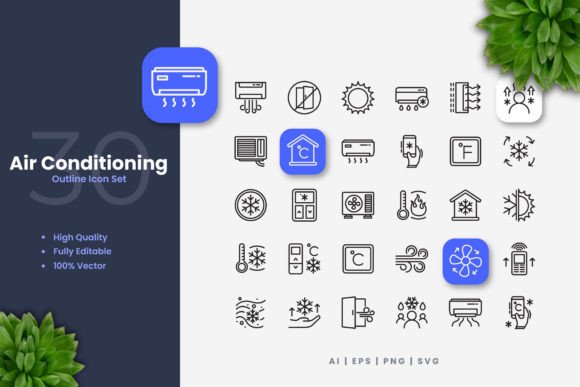
A key factor in successfully adopting any graphic asset is its technical compatibility with your existing tools and workflows. The specification that these Air Conditioning Icons are provided in vector formats like AI, EPS, and SVG is crucial. This means they are inherently scalable and editable, designed to mesh seamlessly with industry-standard software such as Adobe Illustrator and CorelDRAW. Before importing the icons into a major project, a practical step is to audit your team’s software environment. Ensuring everyone has access to, or can read, the provided source files avoids bottlenecks during the collaborative editing phase.
Furthermore, the inclusion of a PNG transparency file offers immediate utility for scenarios where vector editing isn't immediately required, such as quick placement in a presentation, a social media graphic, or a draft mockup in a tool like Figma or Canva. The readme.txt file, while simple, is an organizational aid, often clarifying file versions and usage notes, contributing to a smoother onboarding process for all team members involved.
The Practical Mechanics of Customization and Implementation
The true value of a well-structured icon set lies in its adaptability. The description highlights editable stroke weight and color. In practice, this allows a designer to conform the icons to an established brand style guide without distorting the core artwork. For instance, a company’s primary color might be a specific blue, and their digital interface uses a 2px stroke weight for all line art. By opening the SVG or AI source file, a designer can globally adjust the icon set to match these specifications in minutes, maintaining brand consistency across a campaign that might span a website, a printed brochure, and promotional banners.
This customization extends to context. The same "fan" icon might be used at a smaller size and lighter color on a mobile app tab bar, while a larger, bolder version could serve as a focal point on a poster explaining airflow efficiency. The vector nature of the files ensures quality control is maintained at any scale, preventing pixelation or loss of detail in print or on high-resolution displays. This long-term usability means the asset can be archived and reused for future projects, becoming a reliable component of your organization’s permanent design library.
Workflow Examples: From Asset to Application
Let’s trace a practical implementation path for an entrepreneur creating marketing materials for a new air purification unit. After finalizing the product name and key messaging, they move to the visual design stage. They acquire the Air Conditioning Icons set. Their first action is to open the EPS file in their vector software and change the entire set’s color to their brand green. They then extract a few key icons—for "clean air," "filter," and "auto mode"—and save them as PNGs for quick use.
They drag-and-drop the PNGs into a flyer template in a desktop publishing tool to create a first draft. Later, their web designer uses the original SVG files, embedding them directly into the code for the product page, ensuring crisp rendering on all devices. Meanwhile, the social media manager uses the same PNGs, resized appropriately, to create a series of instructional posts on platform maintenance. Throughout this multi-channel campaign, the icons provide visual consistency, reinforcing product recognition and clarifying features without requiring custom illustration for each medium.
Interacting with Other Assets and Decisions
An icon set does not operate alone. Its effectiveness is amplified when paired with complementary design decisions. Typography choice, layout spacing, and color palette all interact with the icon style. A simple, clean icon design, as indicated here, pairs well with modern sans-serif fonts and minimalist layouts. This synergy creates a professional, trustworthy aesthetic ideal for tech companies, educational platforms, or corporate service providers.
The decision to use a pre-designed set like this also interacts with resource allocation. For a freelancer or small business owner, it represents a time-efficient alternative to commissioning custom icons, which involves briefing, rounds of revisions, and higher cost. It allows them to invest time elsewhere in the project, such as content development or user testing. For educators or bloggers creating infographics, these icons serve as ready-made visual vocabulary to explain complex HVAC concepts quickly, enhancing the educational outcome without requiring advanced graphic design skills.
Organization and Long-Term Management
After the initial project, consider the long-term management of your digital assets. Labeling and storing these icon files logically within your cloud storage or project archive is a simple yet impactful habit. Create a folder named "Brand Assets / Icons / HVAC" and place all versions—AI, EPS, SVG, PNG—inside, alongside a note on the color values and stroke weights you applied. This makes them instantly retrievable for the next related project, whether it’s an update to the existing app or a new annual report section on sustainability initiatives. This organizational step turns a one-time purchase into a sustainable resource, improving efficiency across future workflows and maintaining design consistency over years.
Ultimately, a focused set of Air Conditioning Icons is more than just a bundle of files. It’s a practical solution embedded in the real-world process of creating clear communication. By addressing needs for quality, customization, and format compatibility upfront, it allows professionals, marketers, and creators to execute their visual plans with greater confidence and efficiency, from the earliest planning stages to the final delivery across websites, apps, print, and beyond.