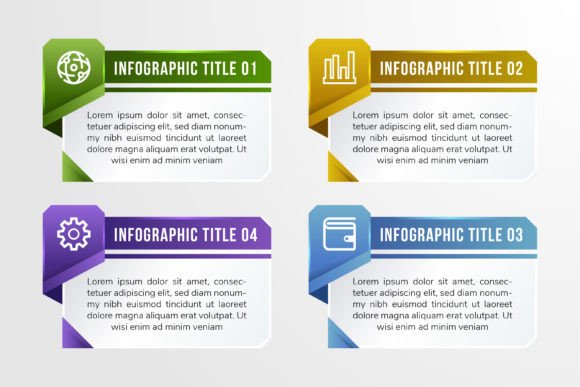
The Hexagon Arrow Element Banner Infographic: A Design Resource Evaluation
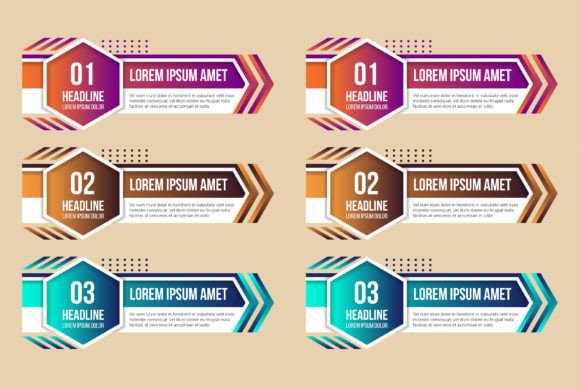
In contemporary digital communication, visual clarity is paramount. Among the many graphic tools available, the Hexagon Arrow Element Banner Infographic represents a specialized design resource tailored for structured presentation. At its core, it is a pre-designed, vector-based graphic template featuring a three-step timeline visualized through interconnected hexagons and directional arrows. It is crafted to convey processes, workflows, or sequential information in a clean, modern layout.
Core Characteristics and Potential Applications
This resource is typically offered as a bundle of editable vector files (AI, EPS, SVG) alongside high-resolution raster formats (JPG). Its defining features—fully editable text, shapes, and colors, coupled with well-organized layers—position it as a foundational asset rather than a static image. The design leverages geometric hexagons, often associated with efficiency and connection, combined with arrows that guide the viewer’s eye through a progression. This creates an immediate visual metaphor for flow and development.
Potential applications are broad, reflecting its versatility. It can serve as a central graphic in corporate reports to outline strategic phases, as a workflow diagram in internal documentation, or as a prominent banner on websites and in digital marketing campaigns to highlight key product features or a promotional offer timeline. Its abstract and modern aesthetic makes it suitable for topics ranging from technology and finance to general business marketing.
Reasons for Interest and Key Benefits
Professionals might seek out such a resource for several practical reasons. First is time efficiency. Creating a polished, vector-based infographic from scratch requires significant design skill and effort. A ready-made, editable template can drastically reduce production time for marketing teams, consultants, or small business owners lacking dedicated design resources. Second is consistency. The template ensures a professionally structured layout, mitigating the risk of an ad-hoc or visually cluttered diagram.
A primary benefit is the high degree of customization. The vector nature means scaling to any size—from a small web badge to a large print backdrop—without loss of quality. Editable elements allow users to align the graphic precisely with their brand identity by changing colors, modifying shapes, or adjusting text. Furthermore, the included multiple file formats ensure compatibility with various software and use-cases, from further manipulation in Adobe Illustrator to simple placement in a presentation using a JPG.
Tradeoffs and Important Considerations
While the benefits are clear, potential users must weigh certain tradeoffs. The most significant consideration is design specificity. The template is defined by its hexagon and arrow motif and three-step structure. If your message requires four, five, or a non-linear sequence of steps, this specific template may require substantial reworking or might not be suitable at all. Its modern, abstract style may also not align with brands or projects requiring a classic, ornate, or highly illustrative visual approach.
Another consideration is the skill requirement. Although advertised as editable, effectively modifying vector files requires basic proficiency with software like Illustrator or compatible open-source alternatives. Users expecting simple drag-and-drop editing in a basic word processor may find the learning curve a barrier, despite the files being well-organized.
Situations Where It Is a Strong Fit
The Hexagon Arrow Element Banner Infographic is a compelling choice in specific scenarios. It is particularly strong for projects needing to communicate a simple, tripartite process quickly and visually. Examples include:
- Launching a new service and illustrating the three-stage customer journey (awareness, consideration, purchase).
- Developing internal training materials explaining a three-phase operational workflow.
- Creating an advertising banner for a limited-time promotion with three key offers or deadlines.
- Enhancing a corporate report section detailing a three-pillar strategy.
In these cases, the template’s inherent structure aligns directly with the message, allowing for rapid customization and deployment.
When Alternatives Might Be Worth Considering
It is prudent to evaluate alternatives when the project parameters diverge from the template’s core design. If the number of steps is different, seeking a template with a more flexible or variable step count (such as a modular circle or flowchart set) would be more efficient. For audiences or brands where a more literal, photographic, or hand-drawn style is essential, alternative graphic resources focused on those aesthetics would better serve the project’s goals.
Furthermore, if the budget is extremely constrained and the user possesses strong design skills, creating a unique infographic from scratch might yield a more tailored result, though at a higher time cost. Conversely, for users with no vector software skills, a simpler solution might be using online infographic builders with pre-built, browser-based editors, even if they offer less file format versatility and potentially lower graphic quality.
Practical Decision-Making Insights
To determine if this resource aligns with your needs, conduct a quick audit of your project. First, analyze your content: does it naturally break into three clear parts or stages? Second, assess your team’s capability: do you have access to and basic knowledge of software to edit vector files? Third, review your brand guidelines: does the modern, geometric style complement your existing visual identity?
If the answers are predominantly yes, the Hexagon Arrow Element Banner Infographic can be a highly effective asset that balances professional output with practical efficiency. It is not a universal solution for all graphic needs, but for targeted applications that match its form and function, it provides a solid foundation for clear and engaging visual communication. Ultimately, its value lies in transforming a conceptual process into an accessible visual, a task it accomplishes with distinct clarity when used appropriately.